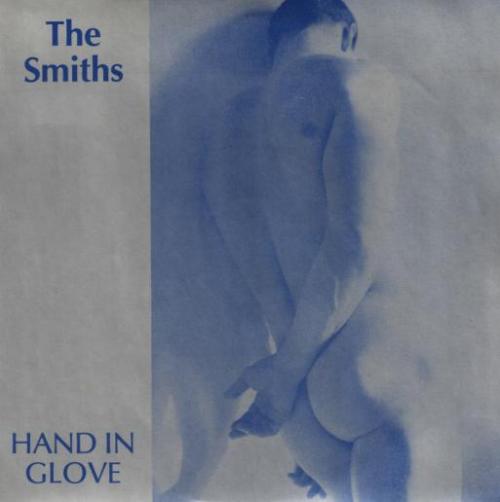
Cover, “Hand In Glove”, copyright Rough Trade
Number 3 in our series of blogs on the best ideas The Smiths had, the ones that changed pop and people’s lives forever. In the first blog, we argued that the band’s best idea of all was breaking up and staying that way. By imploding at the peak of their powers – leaving behind the magnificent “Strangeways, Here We Come” – and never returning to the scene of the crimes, they have secured their legacy and made sure it remains unsullied. Blog 2 celebrated the band’s extraordinary b-sides and the way that these semi-hidden treasures strengthened the bond between band and fan.
For this blog we’re looking at two other big Smiths ideas, each related. The first is Morrissey’s revolutionary, ambiguous approach to sexuality. The second, often overlooked, is his delight in innuendo, a talent presumably honed over years of overdosing on “Carry On” films.
Morrissey’s sexuality was a source of debate and confusion from the very moment the band formed – for the man himself as much as his fans, you suspect. Take a look at this web forum, where you’ll find fans furiously disputing whether the band could be described as heterosexual, asexual or “the gayest band ever” (a claim which would surely aggrieve Pansy Division or Scissor Sisters). In fact, Morrissey’s sexual intentions were so ambiguous that the only tabloid scandal the band endured were foul rumours that they celebrated paedophilia, a radical mis-reading of songs like “The Hand That Rocks The Cradle”, “Reel Around The Fountain” and “Suffer Little Children”.
However, there is little doubt that the earliest incarnation of The Smiths – before they were catapulted into mainstream fame – was a distinctly gayer version of the band than the one who later romped on The Tube to “Sheila, Take A Bow”. The evidence ranges from the superficial (the bizarre presence of Morrissey’s flamboyantly gay friend James Maker as a sort of go-go dancer at early gigs, the highly homo-erotic imagery of the first single sleeve and album sleeves, see above) to the substantial (the lyrics).
In their very first single, “Hand In Glove” Morrissey cries “it’s not like any other love!”. While this could be taken as a declaration of sexual difference or simply the way that all couples thinks their love is unique, second single “This Charming Man” was more direct, with its tale of being picked up by the charming man of the title on “a hillside desolate”. Third single “What Difference Does It Make?” even starts out with the declaration “All men have secrets and here is mine so let it be known…” although Morrissey never quite completes the sentence.
And even all of that is coy in comparison to the lascivious “Handsome Devil”. Yes, the “mammary glands” confuse matters (don’t they always?), but it’s difficult to interpret lyrics like “when we’re in your scholarly room who will swallow whom?” or “a boy in the bush is worth two in the hand” without working out that Morrissey’s interest in other men isn’t entirely intellectual.
Continue reading →




 poplifer.com