This is the first in a series of blogs we will be running over the next couple of weeks exploring the extraordinary legacy of The Smiths, 25 years to the day after their swanswong, “Strangeways, Here We Come”, was released. This blog (which also appears in a slightly longer form on the Huffington Post – welcome HuffPo readers!) will be followed by a series on The Smiths’ 10 best ideas, the ones with which they changed music and lives forever. This blog argues that breaking up and refusing to reform was their last and possibly best idea.
Japanese sleeve for Strangeways, Here We Come, designed by Morrissey, featuring Richard Davalos, copyright Rough Trade
“I’ll see you sometime, darling.” With these low-key words, and a last caress of Johnny Marr’s guitar, the final song on The Smiths’ final album ends, dropping the curtain on an extraordinary career. Released 25 years ago today, the last seconds of “Strangeways, Here We Come” are still enough to make us teary over the loss of one of the most distinctive and beautiful bands in all music, so God knows how it felt for The Smiths’ besotted fans when they first heard it.
Of course, we would see Morrissey again – his solo career was triumphantly launched within an almost indecent six months – but it was indeed the last we would hear from The Smiths. This is one major reason why their legend has grown so vast since: while other revered contemporaries have grubbily re-united (hello, Happy Mondays!), or sullenly cashed in (hey, Pixies!), The Smiths – always the stubborn exceptions – have left their legacy untouched.
Pop Lifer is delighted by this. No, we’ll never see the band live, but – having been front row for Morrissey’s increasingly erratic solo career, and seen the embarrassment the reformed Sex Pistols heaped upon themselves, eyes wide with pound signs and shame – this is probably a mercy. Besides, The Smiths’ passion, originality and beauty are still with us every day, in the extraordinary records they left behind.
Take “Strangeways” itself. Popular wisdom has crowned “The Queen Is Dead” as their masterpiece, but “Strangeways” is The Smiths’ most ambitious and exciting record. Musically, the band stepped out of the narrow confines of indie pop, opening with a completely guitar-free song before leaping to sinister psychedelica, glam rock and swirling orchestral epics.
Gwyneth Paltrow turns 40 today. This is Pop Lifer’s gift.
Fragile – It’s a bit late to handle with care (courtesy of New Line Cinema)
It is easy to let Gywneth Paltrow’s health shop aroma get in the way. She is vegan. She is wholesome. She likes the odd Guinness. Apparently she doesn’t like London any more, she likes a cry and she doesn’t talk about her marriage. She has long legs.
So Pop Lifer won’t talk about her marriage and will pinch our noses to protect our senses from that toxic waft of echinacia and concentrate instead on her acting. To mark her 40th we will celebrate her enduring and varied career by highlighting her biggest achievement, her contribution to one of the most brutal and memorable Hollywood twists of all – the final scene to “Seven”. The one she’s barely in.
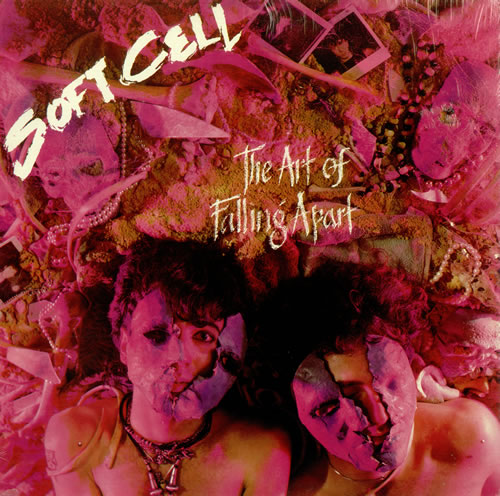
Soft Cell, Art Of Falling Apart album cover, copyright Some Bizarre Records
The second in a series where Pop Lifer tests music, film, television etc by the rules laid down in Lupe Fiasco’s “Superstar”: “Did you improve on the design?/Did you do something new?”. If the answer is yes to either of those questions, you qualify for the Lupe Fiasco Award for Services to Pop Culture.
Nominee #2, Soft Cell’s melodrama masterpiece, “The Art Of Falling Apart”
There must be times when Marc Almond wishes he’d never heard Gloria Jones’ “Tainted Love”, let alone decided to cover it and give birth to one of the 80s most iconic and globally best-selling songs. Not just because it generated the fame and money that fuelled his later attempts at self-destruction, but also because its monstrous success and fame has for many eclipsed his own songwriting. Another great pop injustice, because Almond is an exceptional songwriter, as anyone who has listened to Soft Cell’s other great hit – the elegaic, magnificent “Say Hello, Wave Goodbye” – will know in their bones.
Its a songwriting talent on rampant form throughout “The Art Of Falling Apart”, the second “proper” Soft Cell album, and – in Pop Lifer’s view – Almond and Dave Balls’ masterpiece. On one level, the album sounds like one long attempt to strangle the albatross that is “Tainted Love” and all the fame that went with it. Black-hearted songs that sprawl over the five minute mark – many lacking identifiable pop choruses and neck-deep in themes of soulless sex and the ravages of abuse – seem designed to rid Soft Cell of the armies of hair-sprayed fans that flocked to their debut.
But Almond is simply too melodically gifted to completely abandon tunefulness, and many of the songs linger darkly under your skin like prison tattooes. If a song like “Babydoll” isn’t as shinily catchy as “Torch” it’s still sticky with blood and sex. This conflict – between Soft Cell’s increasing fear and loathing of fame, their desire to return to their art school roots, and Almond’s helpless pop instincts – resulted in an album that still went top 10, but failed to result in any top 20 singles, not even the album’s most accessible song, the magisterial, piercingly observed family psychodrama of “Where The Heart Is”.
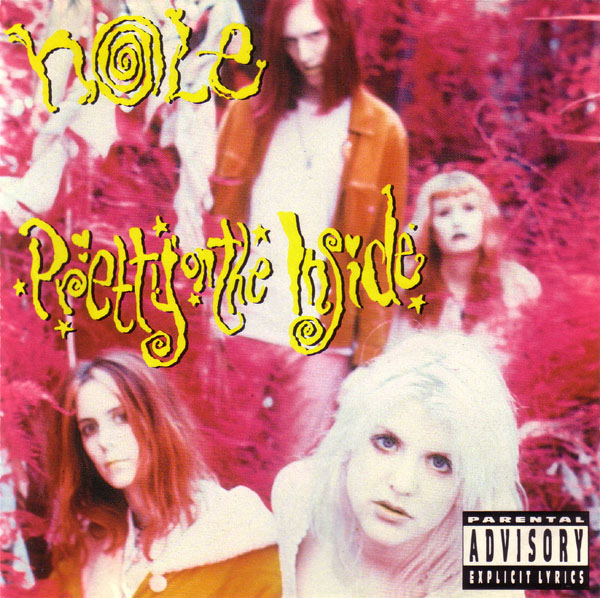
Hole “Pretty On The Inside”, album cover, courtesy Caroline Records
Second in an irregular feature on nuggets of pop culture that have been largely buried by time, but deserve to be digged up again.
Courtney Love – singer, actress, controversy magnet, online provocateur and, yes, famous widow – may not be forgotten, but she’s rarely remembered for the right reasons. Love has spent much of the last two decades being demonised in the foulest and most misogynistic terms, her many successes dismissed as dependent on her status as wife of the late Kurt Cobain. She’s also been a victim of her own excess, both in terms of her notorious struggles with drugs and her angry, self-defeating efforts to set the record straight. Her detractors have long claimed that her biggest hit – 1994’s aching, desperate “Live Through This” – must have been written by Cobain, and that the fame she enjoyed through their brief, tragic marriage is the only reason we’ve heard of Love at all.
This vicious witch hunt only works if you ignore “Pretty On The Inside”, Hole’s debut album. Released almost exactly 21 years ago – before Love and Cobain became an item – “Pretty On The Inside” landed into the alternative music world like a meteor, generating a small earthquake of critical acclaim and sales that outpaced another debut album released a couple of years earlier, Nirvana’s underwhelming “Bleach”. In fact, it could be argued that if anyone in the famous Cobain/Love partnership was chasing the other’s fame and acclaim when they met, it was Cobain (Christ, he even name dropped her as “the best fuck in the world” on The Word).
The problem is that “Pretty On The Inside” has been ignored, and often forgotten. Even Love herself has since described the album as “unlistenable”. You can see (or rather hear) what she means. To call Hole’s debut album rough would be an understatement. Everything about it is ragged and raucous, from Love’s sandpaper roar to Eric Erlandson’s brutal, basic guitars. In terms of subject matter, it’s equally raw: drugs, abortion, suicide, sex, gynaecology, warped psychology, self harm, loathing and sheer toxic fury are the main ingredients in a cocktail that must have been as difficult to brew as it is to swallow.
But here’s the other thing: it is quite, quite brilliant. Difficult, violent, extreme, harrowing and brilliant.
The Beatles were a hero to some but they never meant shit to me.*
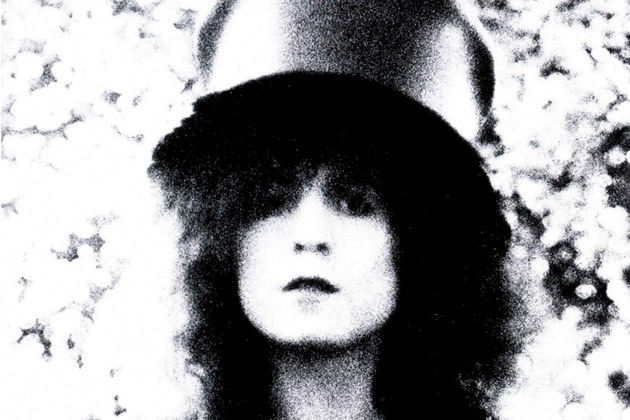
That’s not entirely true, actually, but it makes for a good opening, and Marc Bolan is someone who appreciated a bit of theatre, truth be damned. And Bolan – who died 35 years ago today, a year after I was born – has always been a hero to me.
What is true is that I was one of that first generation of children – born in the seventies – to grow up in a household drenched with pop music. My parents had been young enough to be present at pop’s birth and The Beatles, Bowie, Dylan and Joni Mitchell soundtracked my childhood. Naturally, like all ungrateful children I rebelled against all of this a little, and while I liked some Bowie, I only grew to love The Beatles and Mitchell later in life (I’m still waiting unenthusiastically to love Dylan).
But my mother’s absolute favourite band, the one her eyes truly shone for -T Rex – oh, that I got from the start. I can still remember a car trip taken aged eight through Scotland, with the loping rhythm of “Hot Love” giving way to the greatest “la la la”s in pop history (and even then I remember thinking “Hey Jude”s similar outro was dull bluster in comparison to “Hot Love”s ecstatic reverie). I remember dancing aged nine to the bump’n’grind of “Children Of The Revolution”, to my mother’s delight, little realising the swaggering sexuality of its rhythm. I can still remember the tingling excitement of first listening to “Cosmic Dancer”, Bolan investing its deliciously silly lyrics with all the unearthly wonder and space cadet joy at his considerable command.
It’s one of the few loves I have always been true to, along with Kate Bush. I’ve fallen in and out of love with other idols and even forgotten a few, but Marc Bolan has always been central to my pop life. I first picked “Life’s A Gas” as a song to be played at my funeral at around 13 (look, I was listening to a LOT of Smiths and Cure back then, it seemed natural) and still know that I want those words to be the last heard before I exit stage left into the incinerator: “but it really doesn’t matter at all, it really doesn’t matter at all, life’s a gas.” “Electric Warrior” remains one of my ten favourite records of all time, a miracle of consistency, melodic invention and sonic shine which has barely dated a day.
Pop Lifer is celebrating The Day Today gang’s fearsome stranglehold on most that is good in British comedy. Part 1 began where it almost all began with “The Day Today”. Part 2 delved into the strange, fascinating world of Alan Partridge. Part 3 looked at the latest Iannucci project, “The Thick of It” – the brilliant and definitive modern political sitcom. Now we turn our uninvited attentions to one of its key performers, Rebecca Front.
Courtesy of the BBC Comedy Archives.
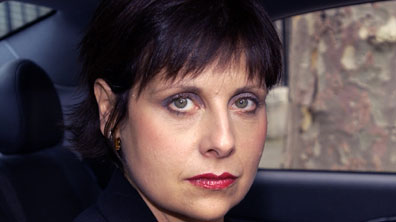
So far Pop Lifer’s celebration of the Day Today gang has focused mostly on the writers, but even the best comic writing dies without good acting, while even lazy writing can be made hilarious by a glittering actor. So in our final Omingenius blog we’re going to turn to arguably the most versatile and least egomaniacal comic performer of the whole gang, the criminally underrated Rebecca Front. She may never have achieved or sought the megafame of Steve Coogan, but she’s been at the heart of just as much brilliant comedy.
Most of the celebration of tonight’s episode of “The Thick Of It” is likely to focus on the splenetic return of Malcolm Tucker, but at Pop Lifer we’re just as delighted to see Front returning as newly crowned Leader Of The Opposition, Nicola Murray. Taking over from Chris Langham’s mordant, death-barely-warmed-up minister in season 3 of “The Thick Of It” seemed a nearly impossible task, but anyone who has been watching Front over the last two decades should have known she was up to it.
Front turned in a typically multi-faceted performance as Murray. At first she seemed doomed to a sort of perpetually harried mumsiness, but as the show progressed Murray shows some genuine zest and desire to actually achieve something good (see her excitable attempts to secure Andy Murray’s endorsement for her healthy eating campaign), as well as an increasing verbal bite (snapping at Ben: “talking to you is like talking to a fucking whoopee cushion”) and even an ability to stand up to the dreaded Tucker. In fact, it’s surprising she’s somehow won the leadership contest, as one of the few ministers who are both likeable and have a discernible spine. Of course, it’s the moments of outright, flailing panic that have defined “The Thick Of It”, and Front does these as well as anyone – as this clips shows. “Get me some ketamine! I want to separate my mind from my body!”
Front first came to national TV fame (the only proper kind) in The Day Today, which we’ve already celebrated at length. But it’s worth recalling the startling array of performances Front turned in, from a queasily glib and glossy American news presenter to the traffic reporter who is subject to Chris Morris’ terrifying and surreal flirtations to Ange, one of the stars of the brilliant soap pastiche The Bureau. In this clip we get to see Front manouvering herself through the most awkward and claustrophobic dramatic exit in TV history, letting loose as a brilliantly lusty Italian TV commentator and delivering the immortal line: “get him into the bureaux de change!”
Front went on to see her versatility tested even further in “Knowing Me, Knowing You” where she had to morph on a weekly basis into a new guest star. Probably the most memorable of these was Yvonne Bond, who was clearly meant to be a parody of Vivienne Westwood. However, time does strange things, and now her performance seems like nothing so much as a sort of pre-emptive satire of Lady Gaga’s cringe-inducing presence on chat shows, dressed absurdly, spouting bland riddles and generating a look of mixed despair and panic in the presenter’s eyes.
Most recently, Front provided some needed consistency to Simon Amstell’s uneven “Grandma’s House.” As the brassy, scathingly honest but loving mother, Front provides gusto (regularly breaking into song, as with her famous booty-slapping performance of “Single Ladies”), earthiness and warmth. Not to mention some of the show’s best lines, as in the incredulous “Don’t you want to be a household name in America like Cat Deeley?”
But of all her performances, it’s Front’s Cath in “Nighty Night” that deserves to win Front comic immortality. We’ll be returning in the future to “Nighty Night” – by some distance the most unhinged, unpredictable, black-hearted and original British comedy of the last decade – but for now let’s focus on Front. If “Nighty Night” can be said to be about anything at all, it’s about the brittleness of English civility, and its flimsiness in the face of someone who simply ignores it, like Jill Tyrrell. All the good manners, neatly kept hedges and varnished front doors of Middle England are like plywood in the face of Jill’s trampling monstrosity.
Nobody better represents the hopeless, desperate attempt to keep things “nice” than Cath. Despite her philandering drunk of a husband, her MS and her new and appalling “friend”, Cath struggles to remain utterly and inappropriately cheerful. Front’s performance in the following scene – the cringing, the grimacing smile and the terrified giggle which conceals a howling scream – is both hilarious and agonising.
Without Front, “Nighty Night” would be little more than a grotesque, a cartoon of horrible people doing horrible things. But her generous, brilliantly nuanced performance is what grounds the show and gives Jill the license and space to become ever more hideous, a social piranha chewing up people and scenery.
It’s a performance that shows an admirable lack of vanity, with Cath regularly appearing as frumpy, washed out and humiliated. There’s real pathos too, as in the scenes where Cath faces up to Don’s “infidelity”. Later, she even gets to challenge Jill directly but – in an oh so English way – every attempt to stand up for herself is soon exhausted, and she soon reverts to a cowed fake politeness. One final scene just to remind us that Front is every bit as comfortable as a Gervais in making us cringe, as well as a brilliant physical comic performer – let’s watch Cath try to discover her inner clown.
Rebecca Front – lynchpin of British comedy and official Pop Lifer Hero, we salute you!



 poplifer.com